
Magdalena Abakanowicz

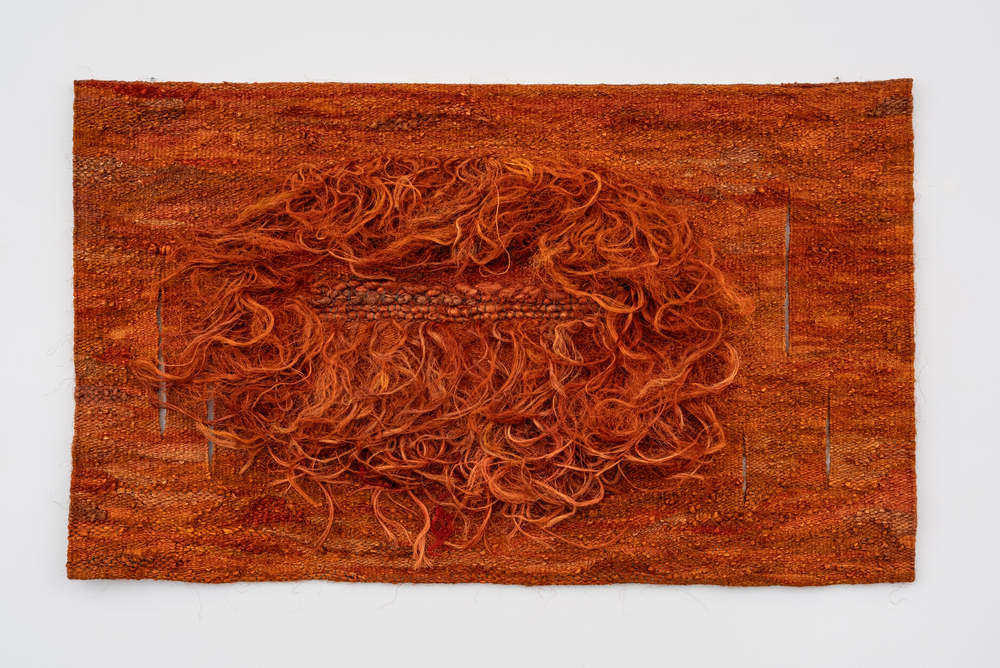
Magdalena Abakanowicz
Vieux Rouge, 1983
Woven sisal
45 × 80 inches (114.3 × 203.2 cm)
© Fundacja Marty Magdaleny Abakanowicz Kosmowskiej I Jana Kosmowskiego, Warsaw.
GRAY is pleased to announce Next is our skin, an exhibition of work by the trailblazing Polish sculptor and fiber artist Magdalena Abakanowicz (1930-2017). With a selection of work spanning four decades, from the 1960s to the 1990s, this exhibition examines the evolution of her practice and her continuous inquiry into the human condition. Next is our skin traces this line of inquiry specifically through her use of materials—from the earliest work in fiber, Szara, an abstract weaving from 1965, whose natural sisal and horse hair protrude from the surface as if to animate the work, to the more disquieting figurative works from the 1980s and ’90s. Working first in burlap and later in bronze, Abakanowicz’s art represents the human struggle to maintain individuality against political and social oppression.
Spending her formative years under Nazi occupation and then Soviet control, Abakanowicz went on to develop a perturbing artistic vocabulary outside the modernist binary of abstraction and representation, opting instead for the use of organic shapes and materials. Abakanowicz became well known for her monumental Abakans, the eponymous sculptures that helped launch a new era of postminimalist art that engaged soft materials, seriality, and experimental modes of installation. Her desertion of the series in 1974—some of which had been included in the acclaimed Wall Hangings (1969) at MoMA, the first major exhibition of fiber arts and textiles—was seen by some as a radical shift toward figuration.
The enigmatic works on view at GRAY New York demonstrate the artist’s lifelong ability to materially innovate while creating unnerving atmospheres. Headless figures, a recurring motif in Abakanowicz’s practice, signify anonymity and the loss of reason under totalitarian regimes. Evidence of her early links to Constructivist artists is visible in Next is our skin, in the contrasting geometric structures and charged interplay between undulating natural materials and industrial rigidity. Abakanowicz’s signature woven sisal appears like an unruly hairlike mass, while other figures disintegrate into textured valleys and muddy folds. Her bronzes, meanwhile, evoke stark permanence, a poignant counterpoint to her emphases on ephemerality, decay, and rebirth.
Opening during the twentieth anniversary of Agora (2006), her iconic public installation of 106 iron-cast figures in Chicago’s Grant Park, Next is our skin will include a new essay published online by Mary Jane Jacob, curator, writer, and educator. As Abakanowicz has said, “I am a historic being, like all of us. Like all of us, I carry within myself an ample portion of humanity prior to history.”